Quality Improvement Initiatives
Quality Improvement Starts Here!
Explore our Initiatives and Measures to learn more about how we plan to work with YOU to improve asthma and COPD in Michigan!
Lung disease is a major cause of illness and death in the United States, and Michigan is especially impacted by asthma and COPD.
- Michigan ranks 7th nationally for asthma, affecting 11.2% of adults (872,519 people).
- COPD prevalence is 8.9%, with significant overlap—28.1% of people with COPD also have asthma.
- Pediatric asthma rates are higher among Black children (17.4%) compared to White children (6.5%).
- Source: Michigan Department of Health and Human Services (MDHHS), Asthma Epidemiology
Despite long-standing guidelines (GINA and GOLD), gaps in asthma and COPD care for adults and children persist due to:
- Poor medication adherence and poor inhaler technique
- Continued tobacco use and environmental trigger exposure
- Frequent exacerbations treated with oral corticosteroids (OCS), which are often overused and associated with significant side effects
INHALE works to close these gaps by advancing guideline-based, patient-centered care across Michigan. Using statewide data to identify asthma and COPD populations—especially those at highest risk—INHALE aims to improve outcomes while reducing the overall burden on patients and healthcare stakeholders.


INHALE’s Strategic Initiatives
Advancing Therapeutic Optimization
The Advancing Therapeutic Optimization strategic initiative is focused on enhancing patient outcomes by reducing reliance on inappropriate and harmful medications, promoting pulmonary rehabilitation, and ensuring appropriate biologic prescribing.
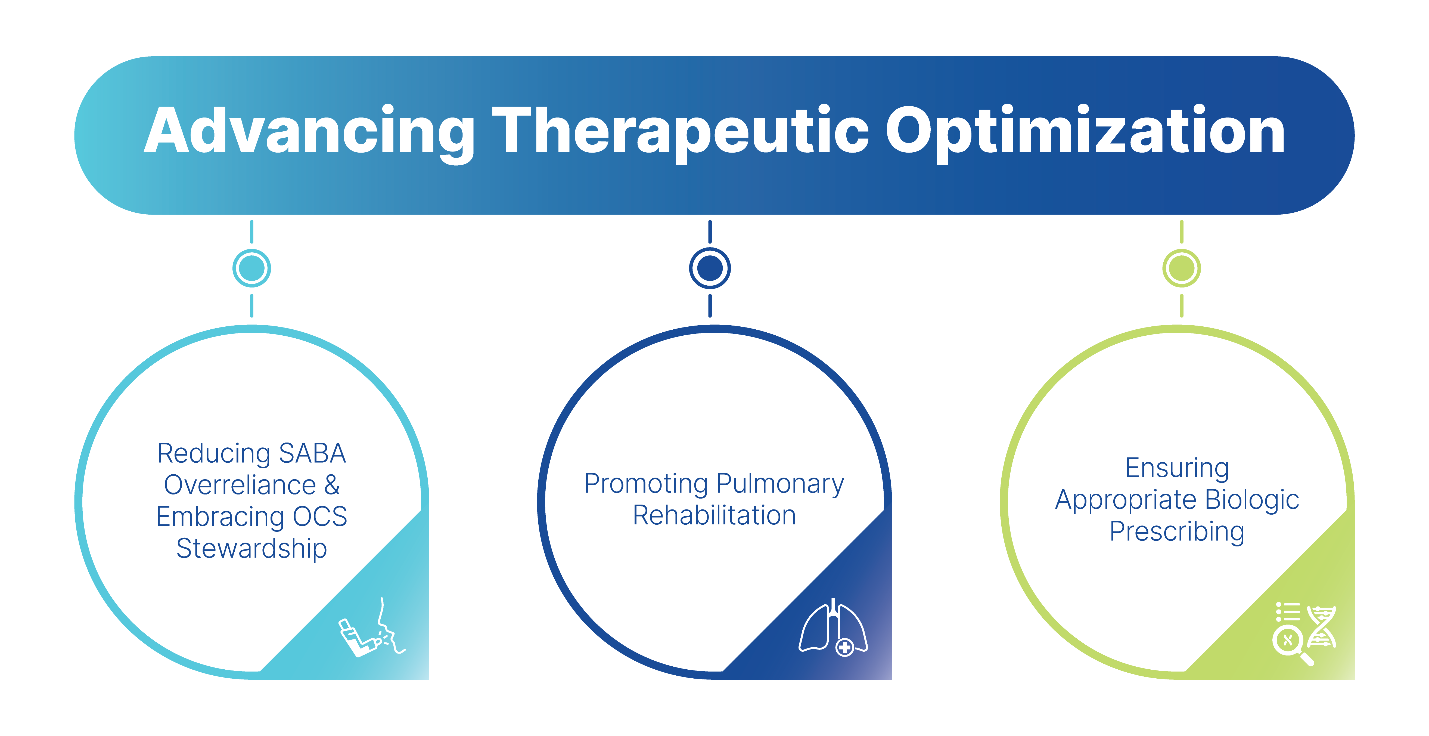
Reducing SABA Overreliance and Embracing OCS Stewardship
Overreliance on short-acting beta agonists (SABA) is linked to increased exacerbations and poor outcomes in asthma, highlighting the need to reduce SABA use and improve adherence to maintenance therapies. While evidence in COPD is still emerging, SABA overuse in this population is also associated with worse outcomes.
Oral corticosteroids (OCS) are commonly used for asthma and COPD exacerbations, but overuse carries significant risks. Even low cumulative exposure is associated with serious comorbidities, increased pneumonia risk, higher mortality, and rising healthcare costs.
Overall, stronger OCS stewardship is urgently needed. INHALE data show that up to 40% of patients treated with OCS are not on effective maintenance therapy, identifying a key opportunity to improve guideline-based care and reduce preventable harm.
Promoting Pulmonary Rehabilitation
Pulmonary rehabilitation is a medically supervised program for patients with COPD—and increasingly asthma—that improves symptoms, exercise tolerance, and quality of life through exercise and education. Participation is associated with fewer hospitalizations and emergency department visits.
Starting pulmonary rehabilitation within three months of a COPD-related hospitalization significantly lowers one-year mortality. This initiative focuses on increasing awareness, referral, and utilization of pulmonary rehabilitation following COPD hospitalization to improve patient outcomes.
Ensuring Appropriate Biologic Prescribing
Severe asthma affects 5–10% of adults and is associated with frequent exacerbations, poor quality of life, and high healthcare use. Although biologics can significantly reduce exacerbations and costs, many eligible patients—especially those in underserved populations—do not receive them due to access, cost, and awareness barriers.
Biologics are also an emerging therapy for COPD, with growing evidence showing reduced exacerbations and mortality. This sub-initiative focuses on closing knowledge and access gaps to improve appropriate biologic use in both asthma and COPD.
Promoting Transformative Education
The Promoting Transformative Education initiative will look to empower healthcare providers and organizations through three distinct sub-priorities: supporting the path from diagnosis to management, reducing harmful practices, and fostering partnership building.
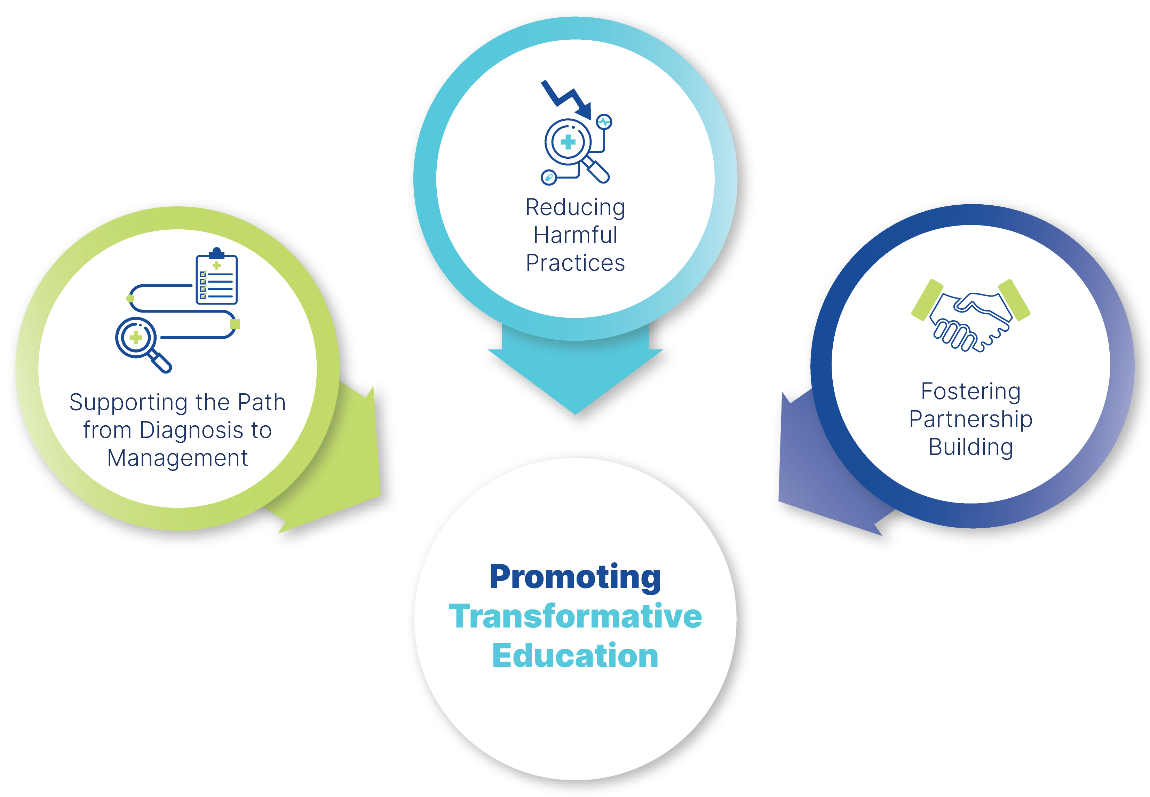
Supporting the Path from Diagnosis to Management
The patient journey from diagnosis through ongoing management is often fragmented. INHALE aims to connect care across the continuum through transformative education, strengthened collaboration, and innovative, technology-enabled interventions that support providers in delivering optimized patient care.
Reducing Harmful Practices
A core focus of INHALE is educating providers on the risks of overusing certain medications and the importance of guideline-based maintenance therapy. Frequent use of medications such as SABA and OCS can lead to harmful downstream effects, including diabetes and cardiovascular disease. INHALE prioritizes reducing these practices through targeted education and close collaboration with partners to improve patient outcomes.
Fostering Partnership Building
As the Coordinating Center supports the full care continuum and works to reduce harmful practices, ongoing member input will be essential to sustaining existing partnerships and building new ones. Engagement will extend beyond current collaborators to include other CQIs and external organizations, strengthening INHALE’s credibility, buy-in, and long-term adoption.
Championing Optimal Health for All
To effectively serve INHALE’s purpose of improving patient outcomes, promoting best practices, and closing gaps in care, championing optimal health for all must be embedded at the center of our work. To deliver this in practice, this strategic initiative will look to develop and disseminate actionable data resources, while simultaneously creating an effective learning community for all.
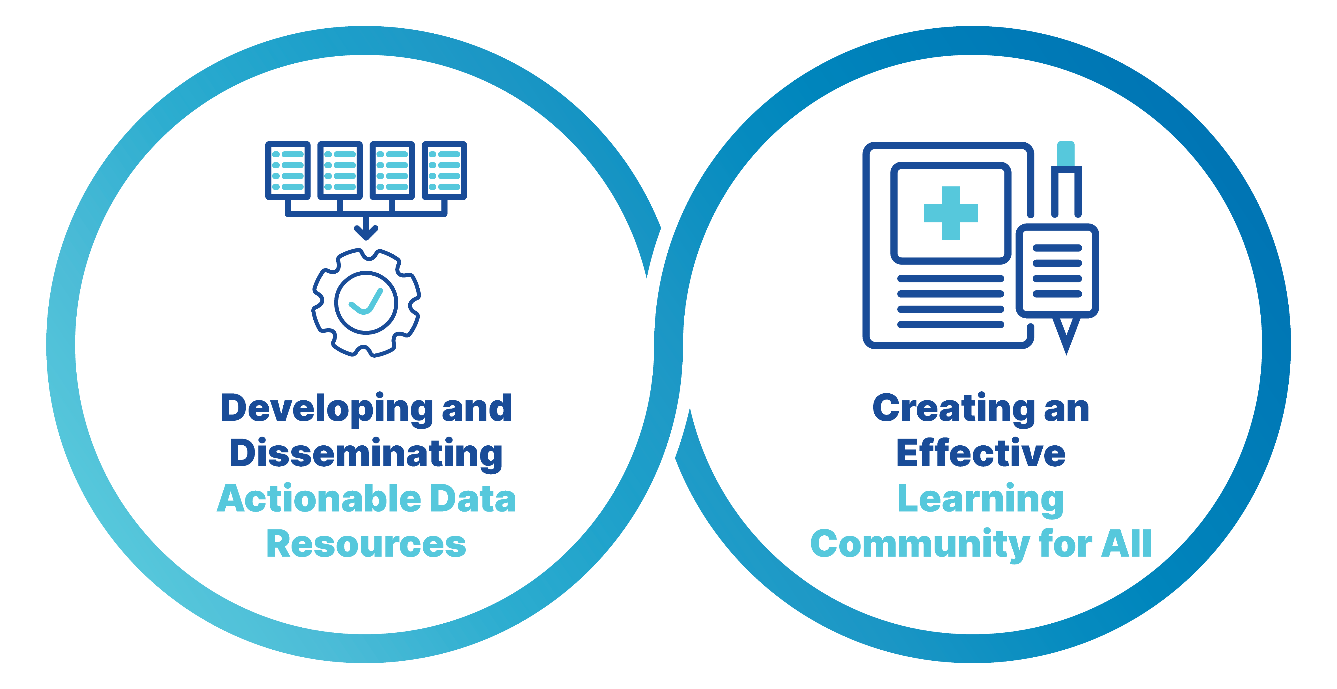
Develop and Disseminate Actionable Data Resources
INHALE believes all patients deserve equitable access to care and the opportunity to breathe deeply and live fully. To support this, the collaborative uses data to identify persistent gaps in care, highlight social vulnerability and risk factors, and equip providers with insights to deliver more informed, targeted, and equitable care—ultimately improving patient outcomes.
Create an Effective Learning Community for All
INHALE supports its data-driven work by building an inclusive learning community that empowers patients to engage in effective self-care and meaningful conversations with providers. Through collaboration with MSHIELD, INHALE ensures this infrastructure is accurate, representative, and supports shared goals for improved control and outcomes.
Delivering Operational Excellence
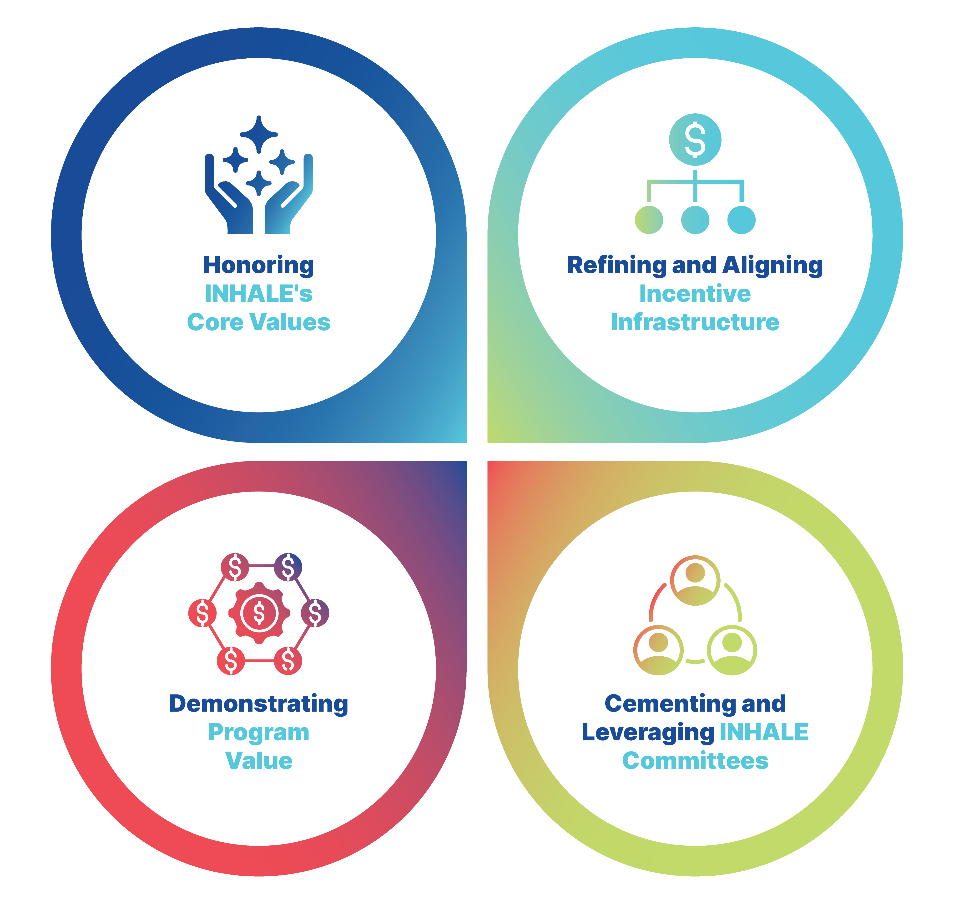
INHALE’s core values provide the cultural cornerstones to support daily operation and effective delivery of identified priority areas. These values of respect, collaboration, innovation, quality, and intent provide the foundation to implement a more targeted approach to delivering operational excellence across all INHALE activities. Honoring these core values on a daily basis will enable internal processes to be strengthened, incentive infrastructure to be refined and deliberately aligned with other programs, program value to be better communicated, and INHALE committees more deliberately leveraged to support development.