Michigan experienced unhealthy air quality during the week of July 13, 2026. More poor air quality is expected because of ongoing wildfires in the United States and Canada, along with weather conditions that are pushing smoke into the state.
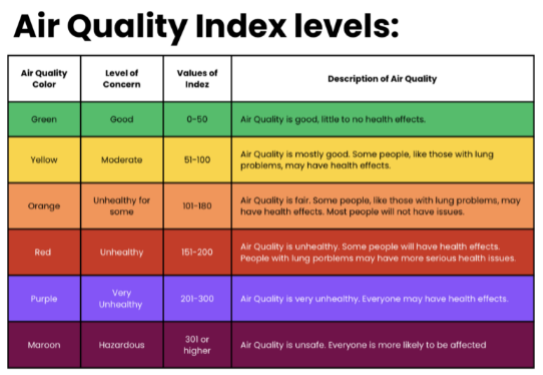
On July 16, Detroit’s Air Quality Index (AQI) reached 724, the highest level ever recorded in the city. Detroit was also ranked the most polluted major city in the world that day by IQAir. Other Michigan cities, including Grand Rapids, Lansing, Flint, Kalamazoo, Midland, Sault Ste. Marie, Marquette, Hancock, and Ironwood, also reported record-high AQI levels. Many AQI readings were well above 300, which is considered hazardous to health.
Health Risks from Wildfire Smoke
When Air Quality Alerts are in effect, people may experience:
- Shortness of breath
- Coughing or wheezing
- Burning or watery eyes
- Sore or scratchy throat
- Runny nose and sinus irritation
- Headaches
- Asthma attacks
- Heart attacks or stroke in severe cases
Wildfire smoke contains harmful gases and tiny particles called particulate matter. Some of these particles, known as PM2.5, are extremely small—much smaller than the width of a human hair. Because they are so small, they can travel deep into the lungs and cause irritation and inflammation.
Tips for People with Asthma or COPD
People with asthma or chronic obstructive pulmonary disease (COPD) should take extra precautions during smoky conditions:
- Check local air quality reports and Air Quality Alerts each day.
- Stay indoors when smoke levels are high.
- Wear an N95 mask if you need to go outside.
- Keep doors and windows closed.
- Use an air purifier or an HVAC system with a high-quality air filter.
- If possible, set your HVAC system to recirculate indoor air instead of bringing in outside air.
- Avoid outdoor exercise, yard work, and other strenuous activities.
- Keep children from playing outside when air quality is hazardous.
- Reduce indoor air pollution by:
- Not smoking indoors
- Avoiding candles, fireplaces, and grills
- Limiting vacuuming and other activities that stir up dust
- Keep your daily medications and rescue inhaler nearby.
Seek medical care right away if you have severe shortness of breath, chest pain, tightness in your chest, serious wheezing, or worsening symptoms of asthma, COPD, or another breathing condition.
Where to Check Air Quality
AirNow (U.S. Environmental Protection Agency)
The EPA uses the Air Quality Index (AQI) to measure air pollution. AQI values range from 0 to 500. Higher numbers mean worse air quality and greater health risks.
https://www.airnow.gov/
Michigan Department of Environment, Great Lakes, and Energy (EGLE)
EGLE monitors air quality across Michigan and issues Air Quality Alerts when needed.
https://www.michigan.gov/egle/maps-data/miair
IQAir
IQAir provides real-time air quality information worldwide and offers alerts through its mobile app.
https://www.iqair.com/air-quality-monitors/air-quality-app